EAN-13 Barcode vs QR Code: What’s the Difference and Which One Does Your Product Need?
A product package can carry several different pieces of information: the brand name, product name, ingredients, instructions, website, promotional message — and often more than one machine-readable code. That is where the confusion starts. A business owner sees an EAN-13 barcode beside a QR code and naturally asks: “If customers can scan both, why do I need two?”
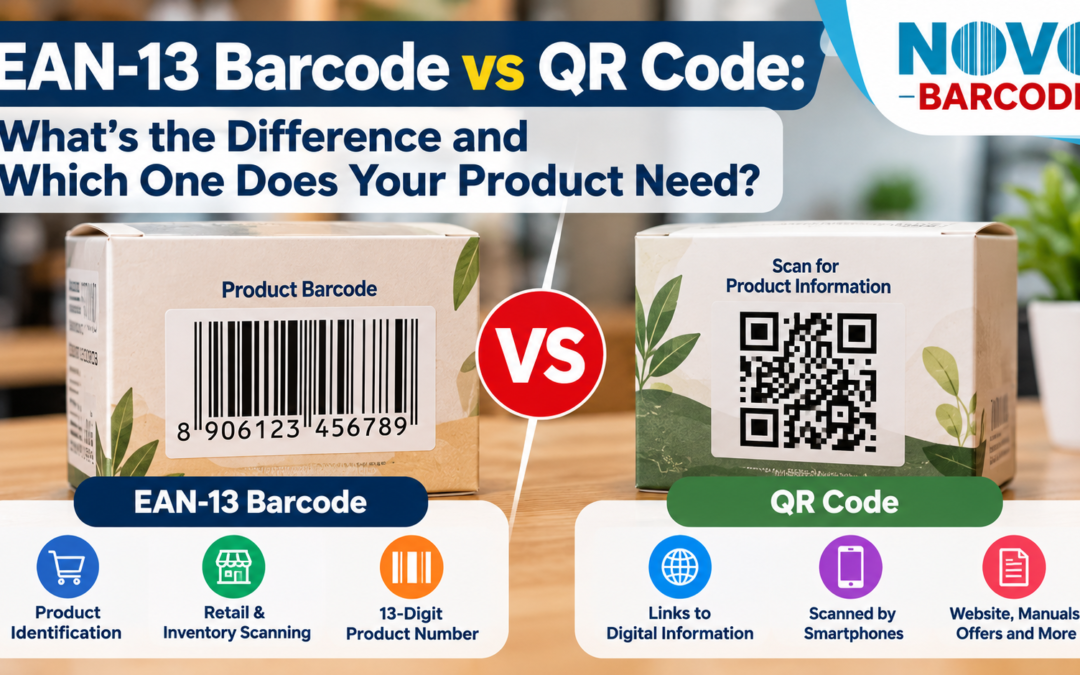
The answer is not about which code is newer or which one looks more advanced. It is about what the code is supposed to accomplish. EAN-13 and QR codes can sit on the same package, but they solve two different problems. One is closely associated with product identification and compatible retail or inventory scanning; the other can create a direct bridge between the physical package and digital information.
This guide looks at the difference from a product-packaging perspective, so you can make the decision before your artwork goes to print.
What Is an EAN-13 Barcode?
An EAN-13 barcode is more than a pattern of black lines printed on a packet. Behind those lines is a 13-digit product identification number. The printed symbol provides a machine-readable way for compatible scanners and systems to capture that number.
This distinction matters because the barcode itself is not a product description, marketing message or website. Its role is much more focused. It represents a product identification number that can be used within systems designed to work with that type of product code.
For a product seller, this becomes particularly important when the barcode is being added to packaging for a product that will be sold through retail or other commercial channels. The barcode needs to be treated as part of the product’s identification setup rather than as a decorative element added at the end of the design process.
The customer may see a set of black lines, but the scanning system sees a product identification number.
If you want to understand the technical background in more detail, see our guide on how EAN-13 barcodes work.
What Is a QR Code?
A QR code works differently. Instead of presenting information as a traditional one-dimensional barcode pattern, it uses a two-dimensional square structure capable of holding digital information.
This makes QR codes particularly useful when the objective is to take someone from the physical product to a digital destination.
From package to website
A customer can scan the QR code and be directed to a webpage containing product information, instructions or other useful content.
From package to experience
A brand can use the QR code to create a digital interaction around the physical product — for example, a manual, catalogue, offer, registration page or feedback destination.
That is why QR codes often appear on packaging even when the product already has an EAN-13 barcode. They are not necessarily competing for the same job.
The Real Difference: Identification vs Information
The easiest way to understand EAN-13 versus QR is to stop looking at their appearance and look at the reason for the scan.
“Which product is this?”
The EAN-13 barcode represents a product identification number. It is therefore closely connected with the identification and scanning of products in compatible commercial environments.
“What should I access?”
A QR code can provide a route to digital information such as a webpage, product information, manual, promotion or other online destination.
This is the key distinction to remember when designing packaging. Scanning capability alone does not make two codes interchangeable.
EAN-13 Barcode vs QR Code: A Practical Comparison
| Question | EAN-13 | QR Code |
|---|---|---|
| What is it primarily for? | Product identification | Digital information and interaction |
| What does it represent? | A product identification number | Digital information encoded in a square pattern |
| Where might you see it? | Product packaging, labels and retail products | Packaging, advertisements, menus, labels and marketing materials |
| How is it commonly scanned? | Compatible barcode scanners | Smartphones and QR scanners |
| Can it connect customers to a website? | Not its primary purpose | Yes, this is a common use |
| Can both appear on one package? | Yes | Yes |
Can a QR Code Replace an EAN-13 Barcode?
This is probably the most important question for a new product seller. The safe answer is: do not assume that it can.
A QR code may be perfectly capable of being scanned by a smartphone, but that does not automatically mean that it will satisfy the product identification requirements of a retailer, marketplace or inventory environment.
Imagine a business that has designed beautiful packaging around a QR code and then discovers, just before launch, that its intended sales channel expects a compatible product barcode. The problem is no longer the barcode itself. The problem is that the packaging was designed around the wrong assumption.
First identify the requirements of the sales channels where the product will be sold. Then decide how the EAN-13 barcode and any additional QR code should appear on the package.
Requirements can differ between retailers, marketplaces and other sales environments, so check the specific requirements that apply to your product before finalising the artwork.
Why a Product May Need Both
The easiest way to see why both codes can coexist is to imagine a product sitting on a retail shelf.
The EAN-13 barcode and the QR code are now doing different jobs on the same physical package.
The EAN-13 barcode can support product identification and compatible retail scanning. The QR code can give the customer a route to additional digital information — perhaps recipes, usage instructions, a product page, an offer or another useful online resource.
In other words, one code can serve the commercial identification side of the product while the other supports the customer-facing digital side.
Which Products Commonly Need This Kind of Planning?
Barcode planning is not limited to one particular industry. The same packaging decision appears in very different product categories.
The exact barcode requirements can vary according to the sales channel. That is why it is better to make the barcode decision as part of the product-launch process rather than treating it as the final step before printing.
If you are launching a new product, see our guide to barcode requirements for a new product launch in India .
Where Does a QR Code Add Real Value?
A QR code is most useful when there is something meaningful on the other side of the scan.
Simply adding a QR code because “modern packaging should have one” does not automatically improve the customer experience. The destination needs to be useful, mobile-friendly and relevant to the product.
Cosmetic Product
A QR code could lead to instructions explaining how and when to use the product, rather than forcing the customer to search for that information separately.
Food Product
A food brand could connect the package to recipes, serving ideas, additional product information or a relevant digital page.
Clothing Brand
A clothing company could use the QR code to provide collection information, product details or another useful brand experience.
What About Different Products and Product Variants?
This is another area where barcode planning becomes important.
A business may initially think, “I have one product, so I need one barcode.” But product ranges are often more complicated once size, colour, pack configuration or other distinctions are introduced.
Black T-Shirt — Small
One product variant that needs to be considered within the product-identification structure.
Black T-Shirt — Medium
A different size may represent a distinct product variant and should not simply be assumed to use the same identification.
The same question can arise with colour, pack configuration and other product differences. The right approach is to plan the product range before the labels and packaging are printed.
If you are unsure about the number of barcodes required for your range, read how many barcodes you need.
Where Should the EAN-13 Barcode Go on the Packaging?
Getting the barcode number is only one part of the job. The printed barcode also has to survive the real world: packaging curves, folds, labels, printing processes, handling and scanning.
A barcode that looks fine on a computer screen can behave differently when it is reduced, printed, wrapped around a curved container or placed close to a fold.
Keep the barcode on a suitable surface with adequate contrast and enough clear space around the symbol.
Avoid placing the barcode where strong curves, folds or other packaging features can distort the printed symbol.
For a deeper explanation of size and placement, see: EAN-13 barcode size and placement on packaging .
How to Put Both Codes on the Same Package Without Making It Confusing
When a package contains both an EAN-13 barcode and a QR code, the goal should not be to fill every available area with information. Good packaging design gives each element enough breathing room.
Make it obvious that the two codes have different purposes. The EAN-13 barcode belongs to the product-identification side of the package. The QR code can be presented as an invitation to access additional digital information.
Before sending packaging for a large print run, test the actual printed version. Testing the artwork on a computer is not the same as testing the final physical package.
Five Mistakes That Can Create Problems Later
Confusing the Two
Assuming that because both can be scanned, they can perform exactly the same role.
Skipping Requirements
Choosing a QR code without checking what the intended sales channel expects.
Adding It Too Late
Finalising packaging artwork before deciding where the product barcode will go.
Making It Too Small
Reducing the barcode simply because the design has no room left.
Not Testing
Sending thousands of packages to print without checking the finished result.
If your finished barcode is creating scanning problems, see our practical guide on what to check when a barcode is not scanning.
So, Which One Should Your Product Use?
There is no universal rule that says a product must choose between EAN-13 and QR. The better question is: what do you want the scan to accomplish?
If the goal is product identification
Consider EAN-13 when the product needs a product identification barcode for compatible retail, inventory or commercial scanning environments.
If the goal is digital interaction
Consider a QR code when you have useful digital content that customers should be able to reach directly from the physical package.
Use both when both have a clear purpose. An EAN-13 barcode can support product identification while a QR code provides an additional digital path for the customer.
A Better Way to Plan Your Product Packaging
Instead of treating the barcode as something that gets added during the final artwork stage, make it part of the product-launch process.
This sequence may look simple, but it prevents one of the most common packaging problems: discovering a barcode requirement only after the artwork has already been approved.
Planning a Product Launch?
If your product needs an EAN-13 barcode, the best time to plan it is before your packaging design is locked. That gives you enough room to consider product variants, barcode placement, label size and the requirements of your intended sales channels.
NovoBarcode focuses on EAN-13 barcode services for product sellers. Before ordering, have your product and variant details ready and check the requirements of the channels where you plan to sell.
Buy an EAN-13 Barcode Online in IndiaFrequently Asked Questions
Is an EAN-13 barcode the same as a QR code?
Can a QR code replace an EAN-13 barcode?
Can I put an EAN-13 barcode and QR code on the same product?
Can an EAN-13 barcode contain a website URL?
Should I get the EAN-13 barcode before designing packaging?
Do different product variants need separate barcode planning?
Final Thoughts: Choose the Code for the Job, Not for the Appearance
The easiest mistake to make with product packaging is to judge a barcode by what it looks like. Both EAN-13 and QR codes are made to be scanned, so at first glance they can seem like two versions of the same technology. But the scan is only the beginning of the story. What matters is what happens after that scan and what the surrounding system expects to receive.
EAN-13 belongs to the product-identification side of the equation. It represents a 13-digit product number and is used in environments where compatible systems need to identify the product. A QR code can play a different role by connecting the physical package with digital information. One does not automatically become a replacement for the other simply because both can be scanned.
For a product business, that distinction is especially important because packaging is expensive to change once it has gone into production. Getting the decision right early means you can design the barcode area properly, account for product variants, keep the packaging visually clean, and test the finished result before committing to a large print run.
And there is no reason to think of the decision as a battle between EAN-13 and QR. When both have a genuine purpose, they can work together: EAN-13 can support product identification, while QR can extend the package into the digital experience.
First identify where you intend to sell the product and check the applicable barcode requirements. Then organise your product and variant information, plan the EAN-13 barcode area in your packaging, add a QR code only when it provides useful digital value, and test the finished package before mass printing.
If you are at the stage of preparing your product and need an EAN-13 barcode, you can now move from planning to the next step: buy an EAN-13 barcode online in India .
Once the barcode decision is made, the next important job is making sure it is printed and positioned correctly — because a good barcode is useful only when the finished product can be scanned reliably.
Continue Reading: EAN-13 Guides
Explore practical guides for product identification, packaging and retail preparation.
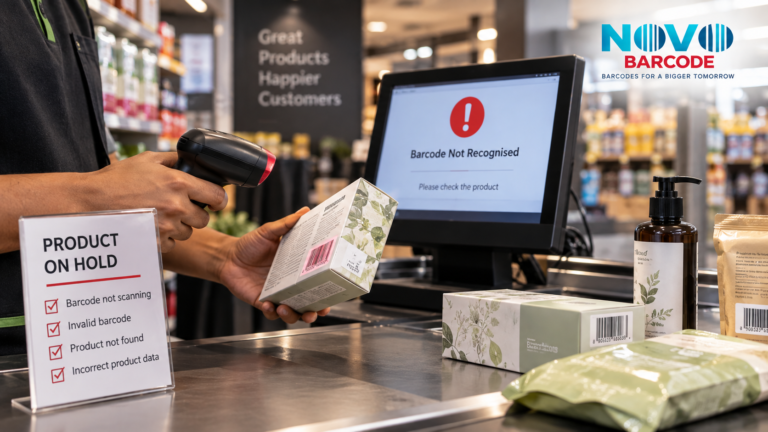 Why Retailers Reject Products With Barcode Problems | India Guide
Read guide →
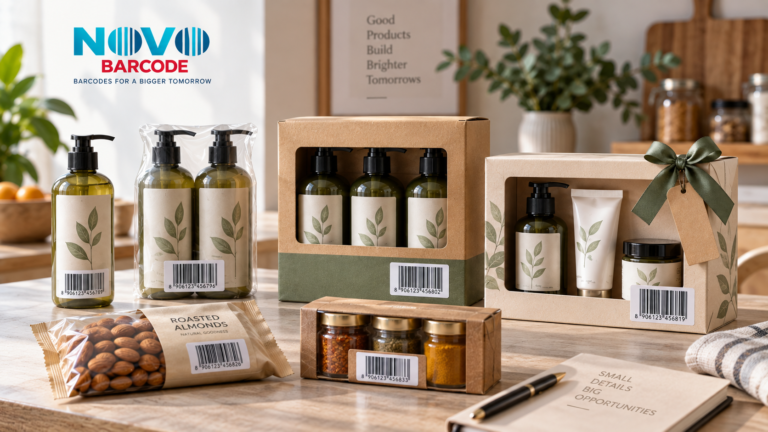 Barcode for Multipack Products in India: Do You Need a New One?
Read guide →
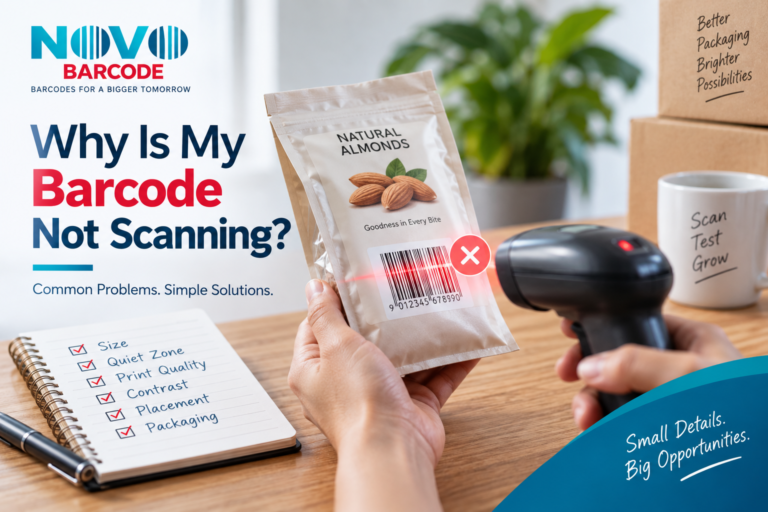 Why Is My Barcode Not Scanning? 11 Common EAN-13 Problems & Solutions
Read guide →
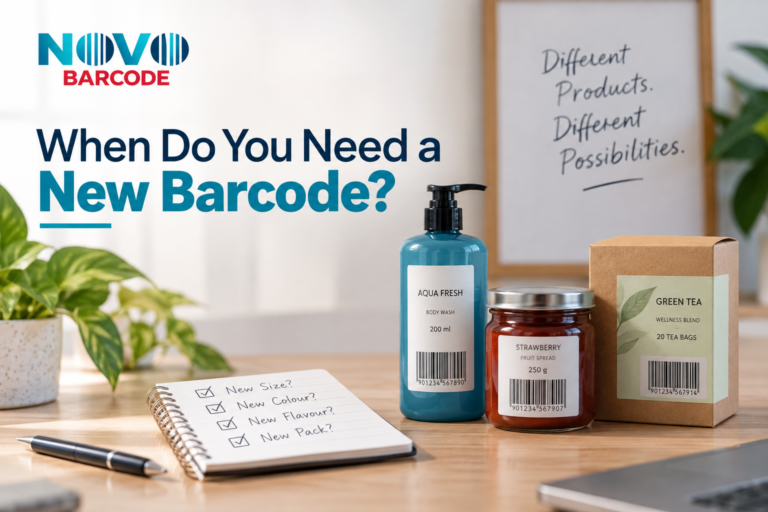 When Do You Need a New Barcode? Product Variant Guide for India 2026-2027
Read guide →