
Clothing and apparel businesses in India often need a reliable way to identify different products, sizes, colours and variants. Whether you manufacture garments, operate a fashion brand, sell through retailers or list products online, an EAN-13 barcode can become an important part of your product identification and inventory process.
A common question from clothing businesses is: Does every clothing size and colour need a separate barcode?
There is also frequent confusion between an SKU, product code, style number and EAN-13 barcode.
This guide explains how EAN-13 barcodes can be used for clothing products in India, including garments, apparel, swing tags, sizes, colours, retail products and online selling.
Clothing businesses should plan barcode identification around their individual products and variants. Size, colour, pack configuration and sales-channel requirements should be reviewed before printing large quantities of swing tags or packaging.
Do Clothing Products Need Barcodes in India?
There is no single rule that says every item of clothing sold in India must have a barcode.
However, barcodes can become important when clothing products are sold through:
- Retail stores
- Organised retail chains
- Department stores
- Wholesalers
- Distributors
- Brand-owned stores
- Online marketplaces
- Inventory and POS systems
- Warehouses and distribution centres
A barcode provides a machine-readable product identifier that can be connected to product information in a retailer’s or business’s inventory system.
For an apparel business with hundreds or thousands of product variants, this can make product identification and inventory management much easier.
If a particular retailer or marketplace requires a specific product-identification standard, always check its current requirements before printing your labels.
What Barcode Is Used for Clothing Products?
EAN-13 is a commonly used retail barcode format for consumer products, including many clothing and apparel products.
An EAN-13 barcode contains a 13-digit product identifier represented in a machine-readable barcode symbol.
The barcode can be printed on:
- Clothing swing tags
- Product labels
- Packaging
- Stickers
- Hang tags
- Retail labels
- Product cartons
The barcode itself does not normally contain the complete product description, size, price or colour.
Instead, the product identifier can be associated with those details in the business’s inventory or retail system.
Barcode vs SKU for Clothing Products
This is one of the most important concepts for an apparel business.
A SKU and an EAN-13 barcode are not the same thing.
For example, imagine a clothing brand sells a men’s cotton T-shirt.
The business could internally create:
- Style: TS001
- Colour: Black
- Size: M
- SKU: TS001-BLK-M
The business may then associate the applicable product identifier with that particular retail item.
| Identifier | Purpose |
|---|---|
| Style Code | Identifies the clothing design |
| SKU | Internal inventory reference |
| Size | Identifies the size variant |
| Colour | Identifies the colour variant |
| EAN/GTIN | Product identification |
| Barcode | Machine-readable representation |
Your internal SKU can be extremely useful for inventory management, but an SKU should not simply be treated as an EAN-13 or GTIN.
Businesses should keep these systems separate and map them correctly in their product database.
Does Every Clothing Size Need a Separate Barcode?
This is one of the most common questions from apparel sellers.
Consider a T-shirt available in:
- Small
- Medium
- Large
- XL
- XXL
If these are treated as separate trade items for the relevant retail environment, they may require separate product identifiers.
For example:
| Product | Size | Colour |
|---|---|---|
| Cotton T-Shirt | S | Black |
| Cotton T-Shirt | M | Black |
| Cotton T-Shirt | L | Black |
| Cotton T-Shirt | XL | Black |
| Cotton T-Shirt | XXL | Black |
The important point is that the business should plan its product-identification structure before printing thousands of tags.
Do not simply assume that one barcode should be printed on every size.
What About Different Clothing Colours?
Colour variants also need careful planning.
Suppose your brand sells the same T-shirt in:
- Black
- White
- Blue
- Red
- Green
If the different colour variants are separately managed or sold as distinct trade items, the business may need to identify them separately.
A clothing master sheet could look like this:
| Style | Colour | Size | SKU |
|---|---|---|---|
| TS001 | Black | S | TS001-BLK-S |
| TS001 | Black | M | TS001-BLK-M |
| TS001 | White | S | TS001-WHT-S |
| TS001 | White | M | TS001-WHT-M |
| TS001 | Blue | S | TS001-BLU-S |
| TS001 | Blue | M | TS001-BLU-M |
How Many Barcodes Does a Clothing Brand Need?
There is no universal number.
It depends on the number of distinct products and product configurations that need separate identification.
For example, suppose a clothing brand launches:
- 5 styles
- 4 colours per style
- 5 sizes per colour
The business could potentially have a large number of individual product variants.
Therefore, do not calculate your barcode requirement simply by counting the number of clothing designs.
Create a complete catalogue containing:
- Product/style
- Colour
- Size
- SKU
- Pack configuration
- Intended sales channel
- Applicable product identifier
Then determine how many identifiers are actually required.
Barcode for Clothing Swing Tags
One of the most common places to print a clothing barcode is the swing tag.
A typical clothing swing tag might contain:
Men’s Cotton T-Shirt
Size: M
Colour: Black
MRP: ₹999
SKU: TS001-BLK-M
[ EAN-13 BARCODE ]
The exact tag design will depend on the brand, retailer and applicable labelling requirements.
The barcode should have sufficient space around it and should not be distorted when the tag is designed.
Barcode Placement on Clothing Labels
The barcode needs to be printed in a way that allows a scanner to read it reliably.
Avoid placing the barcode:
- Across folds
- Over curved surfaces
- On heavily textured areas
- Over photographs
- On dark patterns
- Where it can be damaged easily
- Where another label can cover it
For swing tags, a clean, flat area is generally easier to work with.
Before mass printing, test a physical sample with the type of scanner used by your retailer or inventory system.
Should the Barcode Contain the Clothing Price?
No. An EAN-13 barcode is primarily a product identifier.
The product’s:
- Price
- Size
- Colour
- Brand
- Description
- Stock level
can be stored separately in the retailer’s or business’s system.
For example:
↓
Product database
↓
Men’s T-Shirt
↓
Black
↓
Medium
↓
₹999
This is why changing a product’s selling price does not normally mean changing its product identifier.
Barcode for Clothing Manufacturers
Clothing manufacturers may produce garments for:
- Their own brands
- Private-label brands
- Export customers
- Retail chains
- Wholesalers
- Distributors
If you manufacture clothing for another brand, do not automatically assume that you should assign the brand’s product identifiers yourself.
The brand owner, manufacturer and retailer should establish who is responsible for product identification and which standard is required.
This becomes particularly important when the manufacturer is producing garments for multiple brands.
Barcode for Private-Label Clothing Brands
Private-label apparel is increasingly common.
For example, a business may work with a garment manufacturer to produce:
- Brand: XYZ Fashion
- Product: Men’s Cotton T-Shirt
- Style: TS001
- Colour: Navy Blue
- Size: L
The manufacturer produces the garment, but the product is sold under the private-label brand.
In this situation, the brand owner and manufacturer should clearly establish the product-identification arrangement before printing the packaging or swing tags.
If a retailer specifically requires GS1-issued identifiers, the business should follow the applicable GS1 process.
Barcode for Clothing Sold Online
Many clothing brands now sell through multiple channels:
- Their own website
- Amazon
- Flipkart
- Meesho
- Fashion marketplaces
- Social-commerce channels
- Physical retail stores
- Distributors
The barcode requirements can differ between platforms and product categories.
For example, a marketplace may ask for a GTIN or another product identifier when creating a listing.
Do not assume that because a barcode works in one system it will automatically satisfy every marketplace’s current requirements.
Always check the latest seller requirements of the platform where you plan to list the clothing product.
Barcode for Clothing Export from India
If you manufacture garments for export, barcode requirements can depend on:
- Destination country
- Buyer
- Retail chain
- Importer
- Product-identification standard
- Customer’s inventory system
An Indian clothing manufacturer should therefore obtain the barcode requirements from the overseas buyer before finalising packaging.
Do not wait until the garments are ready for shipment.
Ask the buyer early:
This can help prevent expensive relabelling later.
Common Barcode Mistakes Made by Clothing Businesses
1. Using One Barcode for Every Size
A business may print the same barcode on S, M, L and XL without checking whether the products are separately identified.
2. Confusing SKU with EAN-13
An internal SKU is not automatically a retail product identifier.
3. Using the Manufacturer’s Barcode
A private-label brand should not automatically copy an existing manufacturer’s barcode.
4. Stretching the Barcode
Do not distort the barcode to fit a small swing tag.
5. Printing Over a Busy Background
The barcode should have adequate contrast and a clean scanning area.
6. Printing Thousands of Tags Without Testing
Always test a physical sample before ordering a large quantity of swing tags.
7. Not Maintaining a Barcode Master Sheet
As your catalogue grows, manually tracking barcode numbers becomes risky. A structured product master sheet can help reduce mapping errors.
Create a Barcode Master Sheet for Your Clothing Brand
A spreadsheet can help you maintain your complete apparel catalogue.
| Style | Product | Colour | Size | SKU | Barcode |
|---|---|---|---|---|---|
| TS001 | Cotton T-Shirt | Black | S | TS001-BLK-S | Assigned |
| TS001 | Cotton T-Shirt | Black | M | TS001-BLK-M | Assigned |
| TS001 | Cotton T-Shirt | Black | L | TS001-BLK-L | Assigned |
| TS002 | Polo T-Shirt | Blue | M | TS002-BLU-M | Assigned |
This should become your single source of truth for the product catalogue.
It can be shared between your:
- Product manager
- Packaging designer
- Manufacturer
- Warehouse team
- E-commerce team
- Retail team
How to Prepare Your Clothing Barcode Before Printing
A simple workflow is:
- Finalise the product catalogue. List every style, colour and size.
- Create your SKU structure. For example: TS001-BLK-M.
- Determine the applicable product-identification requirements. Check your retailer, marketplace or buyer requirements.
- Obtain the applicable barcode numbers. Make sure each identifier is mapped to the correct product.
- Generate the barcode artwork. The barcode should accurately represent the assigned number.
- Add it to your swing-tag design. Maintain adequate size, proportions and clear space.
- Print a sample. Do not immediately order thousands of tags.
- Scan the sample. Confirm that the printed barcode scans correctly.
- Start mass production. Once the sample has been checked, proceed with the larger print run.
How to Avoid Barcode Problems When Launching a Clothing Brand
The easiest way to avoid problems is to plan your barcode structure before the packaging designer starts the final artwork.
↓
Colour Variants
↓
Size Variants
↓
SKU Creation
↓
Product Identification
↓
EAN-13 Barcode
↓
Swing Tag Design
↓
Sample Printing
↓
Barcode Testing
↓
Mass Production
This approach can prevent situations where thousands of swing tags need to be reprinted because the wrong barcode was used.
Need EAN-13 Barcodes for Your Clothing Products?
If you are launching a clothing brand, garment business, fashion label or apparel product line, NovoBarcode provides digital EAN-13 barcode numbers and barcode image files for applicable product identification and labelling requirements.
You can choose barcode quantities according to your product catalogue, from individual barcodes to larger packages.
Before ordering, make sure you understand the requirements of your intended retailer, marketplace or buyer. If a particular channel requires GS1-issued identifiers, follow that requirement.
Clothing Barcode Checklist
- ✓ Product/style has been finalised
- ✓ All colours have been listed
- ✓ All sizes have been listed
- ✓ Internal SKUs have been created
- ✓ Product-identification requirements have been checked
- ✓ Correct barcode has been mapped to each product
- ✓ Barcode artwork has been generated correctly
- ✓ Barcode proportions have been maintained
- ✓ Sufficient clear space is available
- ✓ Barcode is not placed over a busy background
- ✓ Swing-tag design has been checked
- ✓ Physical sample has been printed
- ✓ Barcode has been tested
- ✓ Retailer/marketplace requirements have been confirmed
Frequently Asked Questions
Do clothes need barcodes in India?
Not every clothing product is universally required to have a barcode. However, barcodes are commonly useful for retail, inventory, POS, distribution and online product-identification systems. Requirements can depend on the retailer, marketplace and sales channel.
What barcode is used for clothing?
EAN-13 is a commonly used retail barcode format for consumer products, including clothing and apparel.
Does every clothing size need a different barcode?
If different sizes are treated as separate trade items in the relevant sales environment, they may require separate product identifiers. The business should determine this before printing product tags.
Does every colour need a separate barcode?
Different colour variants may need separate identification when they are treated as separate trade items. Clothing brands should plan their product catalogue before assigning identifiers.
Can I use my SKU as my barcode?
An SKU is normally an internal inventory reference created by the business. It should not automatically be treated as an EAN-13 or GTIN.
Can I print an EAN-13 barcode on a clothing swing tag?
Yes. EAN-13 symbols can be printed on suitable product tags and labels when the applicable product-identification requirements are met and the barcode is produced and printed correctly.
Can I use the same barcode for different clothing sizes?
Do not assume that one barcode can be used for every size. If sizes are separately identified trade items, they may require separate identifiers.
Do clothing manufacturers need barcodes?
It depends on the products, customers and sales channels. Manufacturers supplying retailers or brands may need to work with barcode and product-identification requirements specified by their customers.
Do clothing products sold online need barcodes?
Some marketplaces and online sales channels request product identifiers, while requirements can vary by platform and category. Always check the current requirements of the specific marketplace.
Can I use a NovoBarcode EAN-13 barcode for my clothing product?
NovoBarcode provides EAN-13 barcode numbers and barcode image files for applicable product labelling and inventory uses. However, if your retailer or marketplace specifically requires GS1-issued identifiers, you should follow that requirement.
Conclusion
For a clothing business, barcode planning should start long before the garment reaches the retail shelf.
A single clothing style can have multiple sizes, colours and variants, which makes product identification more complicated than simply putting one barcode on every item.
The best approach is to create a structured product master sheet containing your style, colour, size, SKU and applicable product identifier.
Then verify your retailer, marketplace or buyer requirements, create the appropriate barcode artwork, add it to the swing tag or packaging and test a physical sample before mass printing.
For growing apparel brands, proper barcode planning can make product cataloguing, inventory management, retail scanning and distribution much easier.
Continue Reading: EAN-13 Guides
Explore practical guides for product identification, packaging and retail preparation.
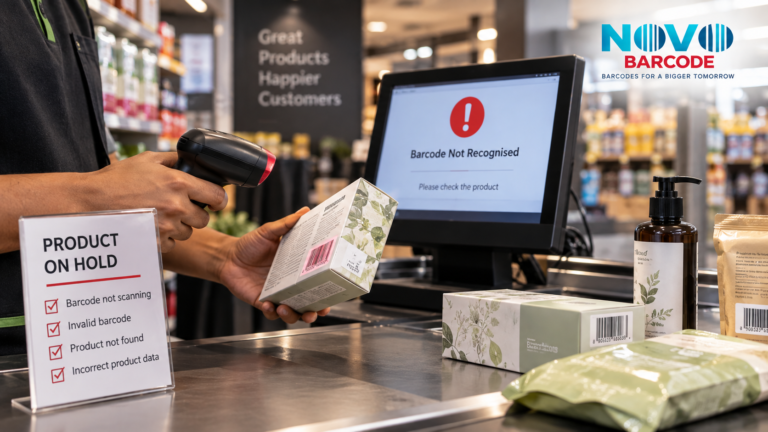 Why Retailers Reject Products With Barcode Problems | India Guide
Read guide →
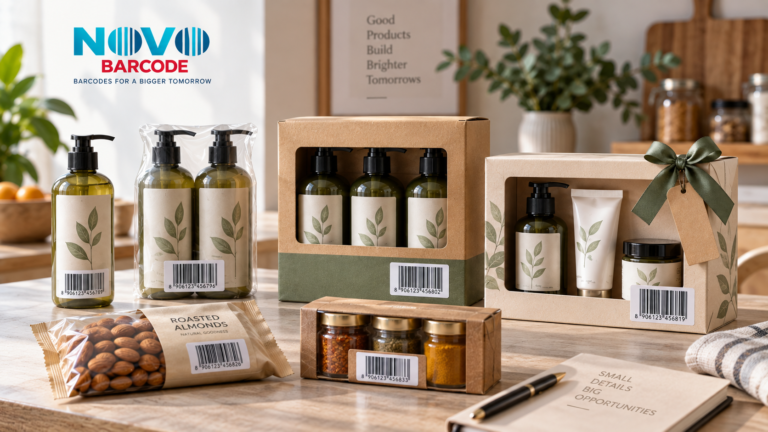 Barcode for Multipack Products in India: Do You Need a New One?
Read guide →
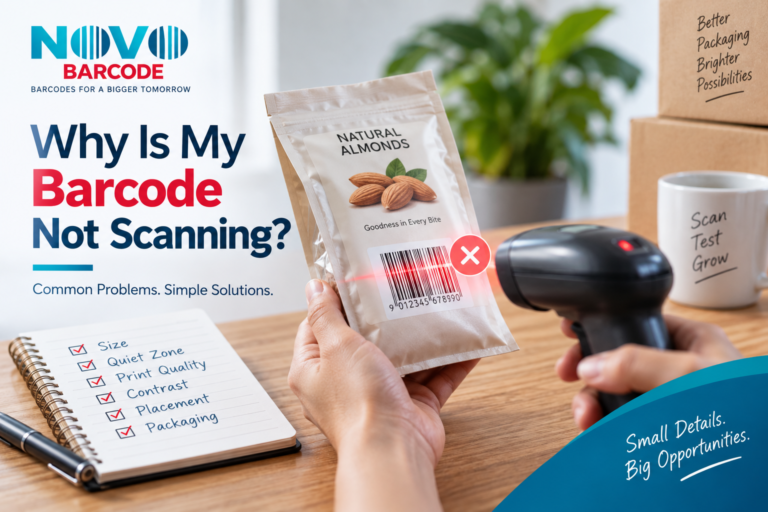 Why Is My Barcode Not Scanning? 11 Common EAN-13 Problems & Solutions
Read guide →
 When Do You Need a New Barcode? Product Variant Guide for India 2026-2027
Read guide →