If you are a manufacturer or brand owner in Kolkata or elsewhere in West Bengal, choosing the right barcode system is a crucial step before launching your products in local markets or supplying to larger retail chains. Whether you produce traditional spices, FMCG items, or private-label goods, understanding when and how to use an EAN-13 barcode can help you avoid costly errors and facilitate smoother retail acceptance.
Your packaging is ready, the printer is waiting, and someone asks for the barcode number. At this stage, many manufacturers make one of two common assumptions: that any 13-digit number will work everywhere, or that the barcode image itself contains the product name, price, and retail information.
Neither assumption is reliable. An EAN-13 barcode is part of a product-identification system. The number must be mapped to the correct product, the barcode must be printed clearly, and the identifier must meet the requirements of the retailer, marketplace, or distributor you intend to supply. For some channels, an independent barcode service may suffice. For others, a GS1-issued identifier may be specifically required.
This guide explains these decisions in practical terms for Indian manufacturers, private-label brands, FMCG companies, and growing product businesses.
What is an EAN-13 barcode?
EAN-13 is a one-dimensional barcode format representing a 13-digit product identifier. The vertical bars form the machine-readable symbol, while the 13 digits printed below are the human-readable number.
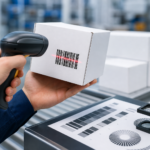
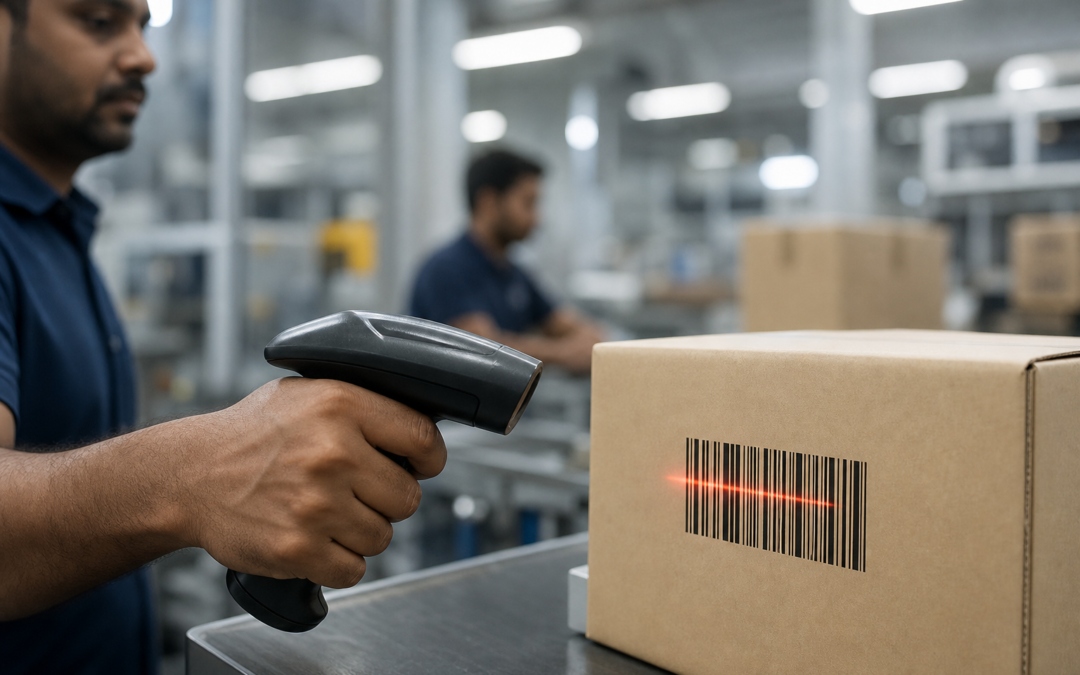
When a compatible scanner reads the symbol, it captures the number. A point-of-sale, inventory, or warehouse system then uses that number to find the relevant product record. The barcode itself does not display the product name, price, stock quantity, or full description; those details are stored in the connected system.
For example, a manufacturer may assign an identifier to a 500 g packet of turmeric powder. The EAN-13 symbol printed on that packet represents the identifier. The retailer’s system may connect it to the brand name, product description, pack size, price, and stock record.
This distinction is important because a barcode can scan correctly even if the product does not appear at billing. In such cases, the retailer may not have created or activated the matching product record.
EAN-13, GTIN and GS1 are not the same thing
These terms are often used together but describe different parts of the product-identification process.
- EAN-13: A barcode symbology used to represent a 13-digit product identifier.
- GTIN-13: A 13-digit trade item identifier that can be represented using an EAN-13 symbol.
- GS1: An organisation and standards system used for product identification and supply-chain data exchange. In India, businesses can obtain GS1-issued identifiers through GS1 India.
- Independent barcode service: A service that may provide EAN-13-format numbers and barcode artwork but is not the same as obtaining a GS1-issued company prefix or GTIN allocation.
The visual appearance of two EAN-13 barcodes may be similar even when their issuing arrangements differ. Therefore, do not judge a barcode by its format alone. Ask what type of number is being supplied, who is issuing it, and whether it meets the requirements of your intended sales channel.
Do Indian manufacturers need a GS1-issued barcode?
There is no single answer for every manufacturer. The right choice depends on where the product will be sold, who will scan or validate it, and what requirements your business partners apply.
A manufacturer supplying a large retail chain, export buyer, marketplace, or distributor may be asked for a GS1-issued GTIN, supporting company information, or product data registered through a recognised system. If a buyer specifically states that GS1-issued identification is required, an independently supplied EAN-13 number should not be presented as an equivalent substitute.
Conversely, a business may need barcode artwork for internal inventory, product labelling, a smaller retail arrangement, or a sales channel that accepts the identifier it has selected. In such cases, an independent service may be considered, subject to the buyer’s written requirements.
Before ordering, ask these questions:
- Where will the product be sold: own website, local retail, organised retail, marketplace, export, or multiple channels?
- Does the retailer or marketplace require a GS1-issued GTIN?
- Will the product identifier be validated against a specific database?
- Does the distributor require a particular standard or documentation?
- Will the barcode be used only for internal stock control, or for external retail identification as well?
The commercial priority is not simply to buy the cheapest number but to obtain an identifier that the intended channel can use and accept.
What does an EAN-13 barcode identify?
An EAN-13 barcode should identify a particular trade item or product configuration. It is not normally unique to every physical unit. If a manufacturer produces 10,000 identical packets of the same product, those packets may carry the same product identifier when they represent the same sellable item.
The challenge arises when one product develops several versions. Consider a manufacturer selling:
| Product configuration | Why it may need separate identification |
|---|---|
| Face wash, 50 ml | Different net quantity |
| Face wash, 100 ml | Different sellable pack size |
| Face wash, charcoal variant | Different product variant |
| Two-bottle retail pack | Different pack configuration |
| Single bottle | Individual retail item |
Whether a particular change requires a new identifier should be assessed under the applicable product-identification rules and the way the item is traded. A packaging colour change alone is not automatically the same as a new product. A new quantity, flavour, model, formulation, or separately sold multipack deserves a more careful review.
How manufacturers should calculate barcode requirements
Do not count only the product names in your catalogue. Count the product configurations that must be distinguished in the relevant sales and inventory systems.
Suppose a clothing manufacturer launches one shirt style in four sizes and three colours. If every size-colour combination is separately sold and managed, the catalogue may contain 12 distinct variants. The manufacturer should not order one barcode merely because there is one design.
Similarly, a spice manufacturer selling four products in three pack sizes may need to plan for up to 12 product configurations. A private-label business should also include seasonal packs, gift sets, and multipacks if they will be sold as separate items. For detailed guidance on spice product barcodes, manufacturers in West Bengal can refer to the complete guide for spice products in India.
Create a master sheet before purchasing numbers. Useful fields include:
- Brand and product name
- Product category
- Variant, flavour, colour, or model
- Net quantity or pack size
- Internal SKU
- Sales channel
- Packaging level
- Assigned product identifier
- Barcode artwork file name
- Status: planned, printed, active, or discontinued
This sheet becomes especially important when the brand owner, contract manufacturer, packaging designer, and retailer are different parties.
Barcode versus SKU: why manufacturers need both
An SKU is an internal stock-keeping code created by your business. It may be written as SPC-TUR-500 for a 500 g turmeric product. The format is controlled by you and is useful inside your inventory system.
An EAN-13 barcode represents a product identifier for scanning in compatible systems. It is not simply an SKU converted into vertical bars. A manufacturer can store both fields in the same product record:
| Field | Example | Purpose |
|---|---|---|
| Product | Premium Turmeric Powder | Customer-facing description |
| Pack size | 500 g | Product configuration |
| SKU | SPC-TUR-500 | Internal stock reference |
| EAN-13 identifier | Assigned number | Machine-readable product identification |
Keeping these fields separate reduces confusion when products are listed on multiple systems or when a retailer uses its own item codes.
Where is EAN-13 used in manufacturing and retail?
Manufacturers use EAN-13 barcodes in several connected activities, provided the scanning equipment and software support the format.
- Product packaging and labels
- Retail point-of-sale scanning
- Stock receiving and dispatch
- Warehouse product identification
- Distributor and retailer catalogues
- Inventory and billing software
- Online product listings where an EAN or GTIN is requested
The barcode is useful only when the receiving system has the correct product record. A printed symbol does not automatically register a product with every shop, marketplace, or warehouse. The manufacturer may need to share the number, product description, pack size, images, and other onboarding information with each trading partner.
Also remember that a shipping carton is not automatically the same item as a retail unit. A 12-piece transport carton, a three-piece consumer multipack, and a single bottle may represent different packaging levels. Ask who will scan each level and for what purpose before copying one symbol across every package.
EAN-13 barcode and QR code: should a product use both?
An EAN-13 barcode and a QR code perform different jobs.
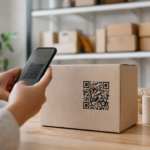
EAN-13 is generally used for product identification and compatible retail or inventory scanning. A QR code can direct a customer to online content such as a product guide, instruction page, warranty form, catalogue, or support page.
A QR code should not be treated as an automatic replacement for an EAN-13 barcode when a retailer or marketplace requires a retail product identifier. A manufacturer may use both, but each code should have a clear purpose. If a QR code is printed on packaging, test that its destination is mobile-friendly and remains useful after production.
Printing EAN-13 on product packaging
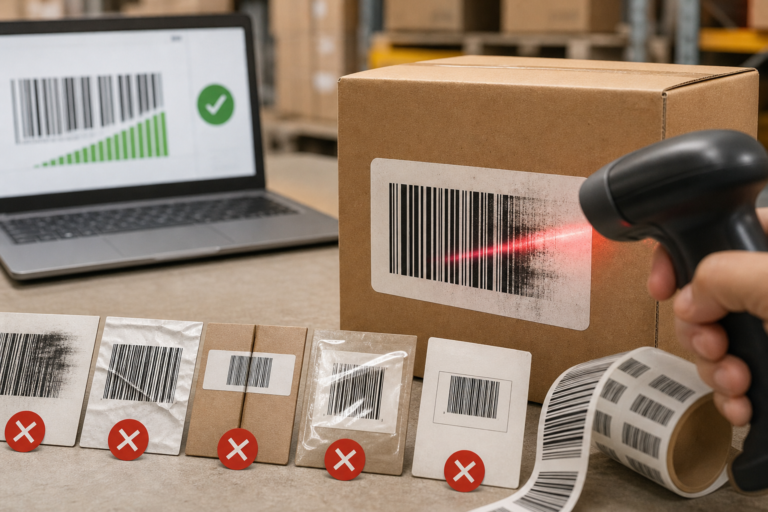
Getting the number right is only half the job. A technically correct identifier can still fail at the checkout if the printed symbol is too small, distorted, or poorly placed.
Before approving packaging, check the following:
- Size: Do not shrink the symbol simply because the artwork is crowded. Use dimensions appropriate to the application and printing process. For guidance on barcode dimensions and placement, see the EAN-13 barcode size and placement guide.
- Proportions: Do not stretch the barcode horizontally or compress its height to fit a design box.
- Quiet zones: Keep clear space on both sides of the symbol. Text, borders, and graphics should not crowd the bars.
- Contrast: Dark bars on a light background are generally the safer choice for scanning.
- Surface: Curved, glossy, metallic, or textured packaging may need additional testing.
- Placement: Avoid folds, seams, sharp edges, and areas likely to be damaged during handling.
- File quality: Use suitable print artwork rather than a low-resolution screenshot.
- Physical testing: Test a sample printed on the intended material before ordering the full production quantity.
A phone scan is a useful initial check, but it does not guarantee that the barcode will work in every retail scanner or meet a buyer’s verification requirement. For higher-risk supply arrangements, ask the retailer or buyer whether formal barcode verification is expected.
Common mistakes made by Indian manufacturers
Buying the barcode before checking the sales channel
A number suitable for internal tracking may not meet a marketplace or retail chain’s identifier policy. Confirm the requirement before payment and before packaging is printed.
Assuming EAN-13 means GS1-issued
EAN-13 describes the barcode format. It does not, by itself, prove that the underlying number was issued by GS1 or licensed through GS1 India.
Using one barcode for every size or flavour
This can cause the wrong product, stock quantity, or price to appear when a system scans the item. Map each distinct sellable configuration before assigning numbers. For more on when a new barcode is needed, see When Do You Need a New Barcode? Product Variant Guide for India.
Printing the barcode at the very end
When the barcode is added after the design is complete, it may be squeezed into an unsuitable space. Reserve a scanning area early.
Confusing a successful scan with retail acceptance
A scanner reading 13 digits proves that the symbol was read. It does not prove that the retailer has onboarded the product or that a marketplace accepts the identifier.
Failing to control the master data
If the manufacturer, brand owner, and designer each maintain separate product lists, the wrong barcode can be attached to the wrong variant. Use one controlled master sheet.
A manufacturer’s pre-print checklist
- Finalise the product list and all variants.
- Separate internal SKUs from external product identifiers.
- Confirm whether the intended channel requires GS1-issued identification.
- Ask the retailer or marketplace for its current barcode and product-data requirements.
- Assign each number to exactly the intended product configuration.
- Prepare accurate barcode artwork for the packaging designer.
- Reserve enough space for size, quiet zones, and readable printing.
- Print and test a production-quality sample.
- Share the number and product master data with the retailer or distributor.
- Keep the assigned identifier, artwork, and product record together for future reference.
Conclusion
For manufacturers in Kolkata and West Bengal, an EAN-13 barcode can be an important tool linking your physical product to the retail or distribution systems that identify, stock, and sell it. However, the barcode number alone is not sufficient; it should correspond accurately to the correct product data, and the printed symbol must be clear and durable under real packaging conditions.
Before purchasing barcodes, carefully assess whether your intended sales channels—whether local retail outlets, organised retail chains, online marketplaces, or export buyers—require GS1-issued identifiers or will accept independently sourced EAN-13 numbers. These options are not always interchangeable, and assuming a barcode is universally accepted because it scans may lead to costly delays or rework.
Begin by preparing a comprehensive product master sheet covering every size, flavour, colour, quantity, and multipack you plan to sell. Confirm channel requirements, assign identifiers only after this review, and test printed packaging samples before approving full production. By following these steps, your West Bengal-based manufacturing business can better navigate barcode requirements and improve the likelihood of successful product launches and retail acceptance.
Continue Reading: EAN-13 Guides
Explore practical guides for product identification, packaging and retail preparation.