
If you manufacture products and want to supply them to supermarkets, retail stores, distributors or organised retail businesses, one of the important things to plan is product identification and barcoding.
A barcode allows a product to be identified quickly when it is scanned at a retail counter, warehouse or inventory system. EAN-13/GTIN-13 is a widely used product identification format for retail products. GS1 explains that GTINs provide unique identification for trade items and are used across retail and supply-chain environments.
For manufacturers, private-label businesses, D2C brands and wholesalers, understanding barcode requirements before printing packaging can help avoid costly mistakes later.
This guide explains how barcodes work for supermarket products in India, what suppliers should consider, how product variations affect barcode requirements and how to prepare your product catalogue before ordering barcodes.
Why Do Supermarket Products Need Barcodes?
Supermarkets handle thousands of products every day. Manually entering every product name and product code at checkout would be slow and can introduce errors.
A barcode provides a machine-readable product identifier that can be scanned quickly. The retailer’s system can then use that identifier to retrieve the relevant product information stored in its database.
Barcode scanning can support:
- Faster checkout
- Product identification
- Inventory management
- Stock counting
- Warehouse operations
- Product receiving
- Sales recording
- Product catalogue management
GS1 India describes EAN/GTIN as product identification used across retail and supply chains, including point-of-sale scanning and inventory management.
What Barcode Is Used for Supermarket Products?
EAN-13 / GTIN-13 is one of the most common barcode formats encountered on retail consumer products.
An EAN-13 barcode represents a 13-digit GTIN. The number identifies the product, while the barcode graphic provides a machine-readable representation that can be scanned.
GS1 states that retail products sold in stores or online are identified with GTINs and that a GTIN-13 can be represented using the EAN-13 barcode symbol.
However, businesses should always check the specific requirements of their intended supermarket, retailer, distributor or sales channel before purchasing a barcode. Different organisations may have their own onboarding and product-data requirements.
Who Needs a Barcode When Supplying Supermarkets?
Barcodes are relevant to many types of businesses supplying physical products to organised retail.
- Product manufacturers
- FMCG companies
- Private-label brands
- D2C brands entering retail
- Wholesalers
- Distributors
- Small manufacturers
- Consumer-product startups
- Household-product manufacturers
- Clothing brands
- Cosmetics companies
- Stationery manufacturers
- Toy manufacturers
The requirement is not limited to large companies. A small manufacturer planning to supply a local supermarket may also need to understand the retailer’s product identification requirements.
Barcode for FMCG Products Supplied to Supermarkets
FMCG companies commonly have large product catalogues, making proper barcode planning particularly important.
A company may sell:
- Personal-care products
- Household products
- Packaged foods
- Beverages
- Stationery
- Cleaning products
- Consumer accessories
Each product catalogue should be reviewed carefully because different products, variants and pack configurations may require separate product identification.
Does Every Product Need a Different Barcode?
Businesses should not assume that one barcode can simply be printed on every product from the same brand.
The appropriate product identifier depends on the distinct trade items and applicable identification rules.
For example, suppose a brand sells a shampoo in:
- 100 ml
- 200 ml
- 500 ml
These are different product configurations and should be reviewed separately when creating the company’s barcode master list.
The same principle can apply to different flavours, colours, models, formulations, sizes or other product variations.
Barcode for Supermarket Products With Different Sizes
Pack size is particularly important for manufacturers.
Imagine a household brand selling a cleaning product in:
- 250 ml
- 500 ml
- 1 litre
- 2 litre
The manufacturer should not simply assume that one product barcode can be used for all four retail configurations.
Instead, the company should create a product master list and determine the appropriate identifier for each distinct product configuration.
Barcode for Different Product Variants
Product variations can also affect barcode planning.
For example, a stationery company could sell the same notebook in:
- A4 size
- A5 size
- Different page counts
- Different cover designs
Similarly, a clothing brand may have different sizes and colours, while a cosmetics brand may sell different shades or formulations.
The business should review each distinct product configuration against the requirements of its intended sales channel.
Barcode vs SKU: What Should Supermarket Suppliers Know?
One of the most common mistakes made by new manufacturers is confusing an SKU with a barcode.
An SKU is generally an internal stock-keeping code created by a business for managing its own inventory.
A GTIN is a product identifier used within the relevant product-identification system. It can be represented by an EAN-13 barcode symbol for retail products.
For example:
| Product Information | Example |
|---|---|
| Brand | ABC Home |
| Product | Liquid Cleaner |
| Pack Size | 500 ml |
| Internal SKU | CLN-500-01 |
| Product Identifier | Applicable GTIN |
| Barcode Symbol | EAN-13 where applicable |
How Does a Supermarket Barcode Scan Work?
When a cashier or inventory employee scans the barcode, the scanner reads the machine-readable pattern.
The associated product identifier is then used by the retailer’s software to retrieve the product record stored in its database.
The retailer’s database may contain information such as:
- Product description
- Product price
- Inventory quantity
- Product category
- Supplier information
- Tax-related information where configured
The barcode itself should not be confused with the retailer’s complete product database. The barcode provides the identification key that allows the relevant system to find the product record.
Why Barcode Quality Matters on Supermarket Packaging
Having a barcode number is only one part of the process. The barcode must also be printed correctly on the packaging.
A poorly printed barcode may be difficult for scanners to read.
Before mass production, businesses should check:
- Barcode dimensions
- Print quality
- Contrast
- Quiet zones
- Packaging placement
- Readable numbers below the barcode
It is a good practice to test a packaging sample before printing a very large quantity.
Barcode for Supermarket Suppliers: What Information Should You Prepare?
Before ordering barcodes, prepare a product master sheet.
Your spreadsheet can include:
- Brand name
- Product name
- Product category
- Variant
- Size
- Net quantity
- Internal SKU
- Packaging type
- Barcode/product identifier
Maintaining this information in one place makes barcode management easier as your product catalogue grows.
How Many Barcodes Does a Supermarket Supplier Need?
There is no universal number.
The quantity depends on how many distinct products and product configurations your business sells.
For example, a new brand may start with only five products, while an established manufacturer may have 100 or more product configurations.
A company launching:
- 10 products
- Multiple pack sizes
- Several flavours
- Different variants
may require considerably more identifiers than the simple product count suggests.
For a detailed explanation, see our guide: How Many Barcodes Does a Product Need in India?
Barcode for Small Manufacturers Supplying Retail Stores
Small manufacturers often begin by selling through local shops before expanding into larger retail networks.
A typical small manufacturer might produce:
- Home-care products
- Stationery
- Personal-care items
- Handmade products
- Accessories
- Consumer goods
When moving from direct sales to organised retail, the manufacturer should understand the product identification requirements of its target retailers before printing packaging.
Barcode for Private-Label Supermarket Products
Private-label businesses can face additional product-identification questions because the brand owner and manufacturer may be different companies.
For example, a retailer may sell products under its own private label while a third party manufactures those products.
The parties should clearly establish who owns and manages the product identifiers and product information before the packaging is finalised.
This becomes especially important when a private-label catalogue contains many SKUs.
Can Supermarket Products Use EAN-13?
EAN-13 is widely used for retail products and is designed to represent GTIN-13 product identifiers.
GS1 documentation identifies GTIN-13/EAN-13 among the identification options used for retail trade items.
However, a supplier should always confirm the specific requirements of the supermarket or retail chain it intends to supply.
Why Manufacturers Should Get Their Barcode Information Right Before Packaging
Changing product packaging after printing can be expensive.
Imagine a manufacturer has already printed 50,000 boxes and then discovers that the product information or barcode needs to be changed.
The company may have to reprint labels or packaging.
A better workflow is:
- Create the complete product catalogue.
- Determine the applicable product identifiers.
- Confirm retailer requirements.
- Generate or obtain the barcode artwork.
- Add the barcode to packaging artwork.
- Check the printed sample.
- Proceed with mass production.
Should You Buy Barcodes in Bulk?
Bulk barcode packages can be useful for manufacturers and brands that have multiple products or are planning a larger product launch.
NovoBarcode offers multiple quantity options, including:
- 1 barcode
- 5 barcodes
- 10 barcodes
- 25 barcodes
- 50 barcodes
- 100 barcodes
- 200 barcodes
You can view the available packages here: Buy EAN-13 Barcodes Online India .
What Should You Check Before Buying a Barcode?
Before purchasing, ask the following questions:
- What products am I selling?
- How many distinct product configurations do I have?
- What pack sizes will I sell?
- Do I have different variants?
- Which supermarkets or retailers do I plan to supply?
- Do those retailers have specific barcode requirements?
- Do my distributors require specific product information?
- Is my packaging artwork ready?
- Can the final printed barcode be scanned correctly?
Important: Check the Supermarket’s Barcode Requirements
This is one of the most important points for new suppliers.
Do not assume that purchasing a barcode automatically guarantees acceptance by every supermarket or retailer.
Retailers may have their own supplier onboarding procedures, product-data requirements and barcode standards.
If a supermarket specifically requires a GS1-issued GTIN or another particular identification standard, the supplier should follow that requirement.
GS1 India provides GTIN validation services that allow retailers and other businesses to validate GTIN information against its product database.
Common Barcode Mistakes Made by New Suppliers
- Using the same barcode for different products
- Not maintaining a barcode master list
- Printing a low-quality barcode
- Changing product information after packaging is printed
- Not checking retailer requirements
- Confusing SKU numbers with GTINs
- Ordering too few identifiers for a growing product range
- Not testing barcode scanning before mass production
Supermarket Barcode Checklist
- ✓ Prepare your complete product list
- ✓ List every product variant
- ✓ Record every pack size
- ✓ Assign internal SKUs
- ✓ Check supermarket requirements
- ✓ Check distributor requirements
- ✓ Determine the applicable product identification standard
- ✓ Finalise barcode information before packaging
- ✓ Test barcode print quality
- ✓ Maintain your barcode records securely
Frequently Asked Questions
What barcode is commonly used on supermarket products?
EAN-13/GTIN-13 is a widely used retail product identification format. However, the specific requirements can vary by retailer and product.
Can small manufacturers use barcodes?
Yes. Small manufacturers can use appropriate product identification systems when selling through retail, distribution and inventory channels.
Do supermarkets scan EAN-13 barcodes?
EAN-13 is widely used for retail products and is designed for product identification at retail points of sale. Individual supermarkets may have additional requirements.
Do different product sizes need different barcodes?
Different product configurations should be reviewed separately when determining product-identification requirements. A business should not automatically reuse one identifier across different trade items.
How many barcodes should a manufacturer buy?
The appropriate quantity depends on the number of distinct products and configurations that need identification.
Can I buy EAN-13 barcodes online in India?
Yes, online barcode services are available. Before purchasing, businesses should confirm that the barcode solution meets the requirements of their intended retailers, distributors and other sales channels.
Can one barcode be used for my entire brand?
A single product identifier should not simply be reused for unrelated products. Each applicable trade item should be reviewed according to the relevant product identification rules.
Final Thoughts
If you are planning to supply products to supermarkets, getting your product identification strategy right before printing packaging can save time, money and unnecessary rework.
EAN-13 is widely used for retail product identification, but the correct barcode solution depends on your products, business model and the requirements of your intended retail partners.
Whether you are a small manufacturer, D2C brand, private-label company, wholesaler or established FMCG supplier, start by preparing a complete product catalogue and understanding the barcode requirements of your target sales channels.
Related Barcode Guides
Continue Reading: EAN-13 Guides
Explore practical guides for product identification, packaging and retail preparation.
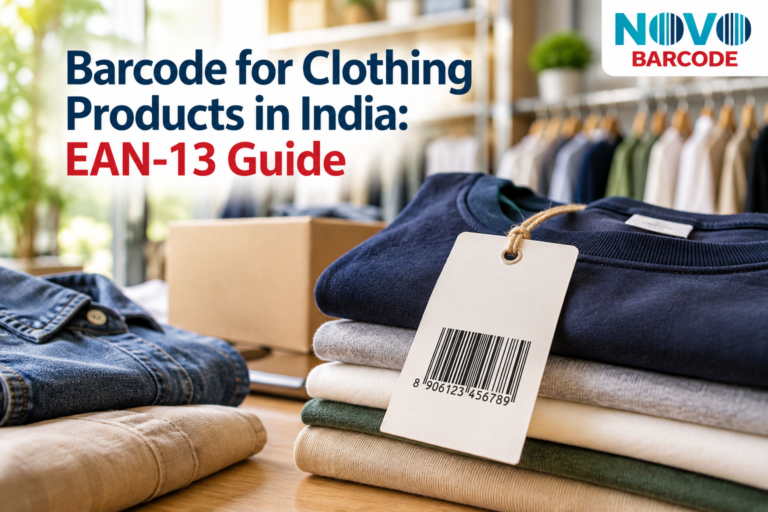 Barcode for Clothing Products in India: EAN-13 Guide
Read guide →
Barcode for Clothing Products in India: EAN-13 Guide
Read guide →
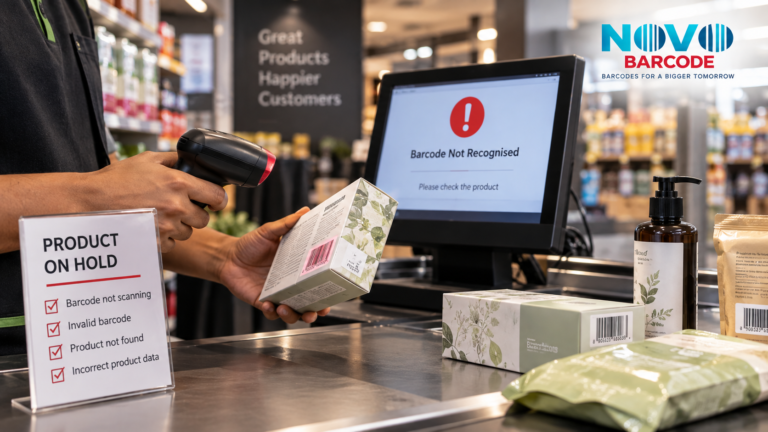 Why Retailers Reject Products With Barcode Problems | India Guide
Read guide →
Why Retailers Reject Products With Barcode Problems | India Guide
Read guide →
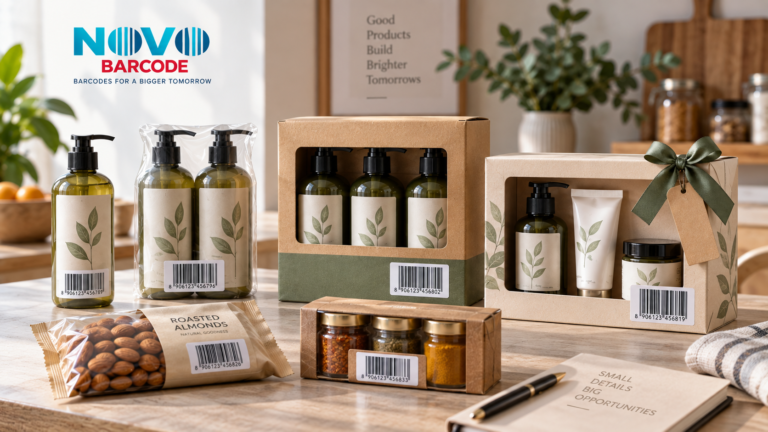 Barcode for Multipack Products in India: Do You Need a New One?
Read guide →
Barcode for Multipack Products in India: Do You Need a New One?
Read guide →
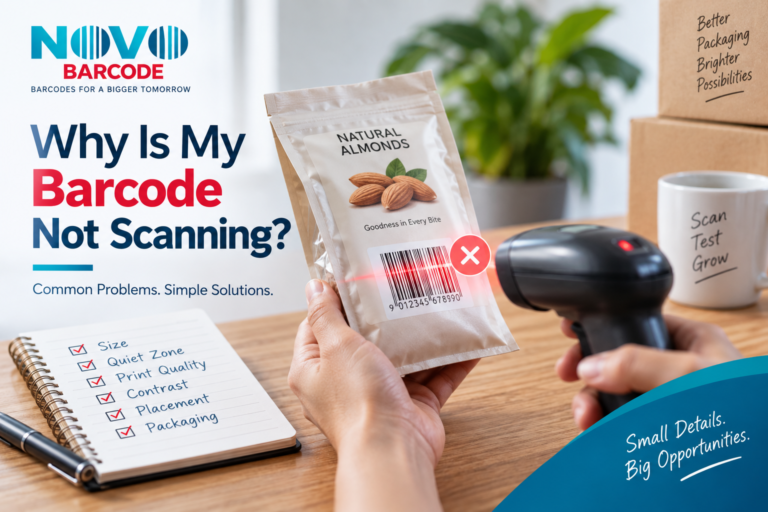 Why Is My Barcode Not Scanning? 11 Common EAN-13 Problems & Solutions
Read guide →
Why Is My Barcode Not Scanning? 11 Common EAN-13 Problems & Solutions
Read guide →