
Barcode for Clothing Products in India (2026–2027): Complete Guide for Garment Brands, Boutiques & Fashion Sellers
The Indian fashion and apparel market has changed significantly with the growth of e-commerce, D2C brands, marketplaces, organised retail and online fashion stores.
Today, even a small clothing business can sell products through its own website, Amazon, Flipkart, Myntra, retail shops, distributors and social-commerce channels.
But as the number of products increases, managing clothing SKUs can become difficult.
For example, a clothing brand may sell one T-shirt in Small, Medium, Large and XL, while also offering several colours. A single clothing design can therefore result in multiple product variations.
This is where product identification and barcode management become important.
If you are searching for barcode for clothing products in India, EAN-13 barcode for garments, barcode for T-shirts or barcode for apparel products, this guide explains what clothing businesses should know before printing barcodes on labels and packaging.
Why Do Clothing Products Need Barcodes?
A barcode provides a machine-readable way to identify a product.
For a clothing business, a barcode can help connect a physical garment with information stored in a retail, inventory or product-management system.
Instead of manually entering product information, a scanner can read the barcode and retrieve the associated product record.
For apparel businesses, this can help with:
- Inventory management
- Retail billing
- Stock tracking
- Product identification
- Warehouse management
- Order processing
- Product cataloguing
- Retail distribution
For a small boutique with 20 products, manual stock management may initially be manageable. But when the catalogue grows to hundreds or thousands of SKUs, barcode-based identification can make daily operations much easier.
What Is an EAN-13 Barcode for Clothing?
EAN-13 is a widely used retail barcode format containing a 13-digit GTIN.
The barcode image represents the numerical identifier in a machine-readable format.
For a clothing brand, the barcode can be printed on:
- Hang tags
- Price tags
- Product labels
- Packaging
- Stickers
- Garment boxes
- Retail labels
The barcode itself does not contain every detail about the garment. Instead, the number can be associated with information such as:
Product: Men’s Cotton T-Shirt
Colour: Black
Size: L
SKU: TS-BLK-L
The retailer’s or seller’s system can then use the barcode number to identify the corresponding product.
Do Different Clothing Sizes Need Different Barcodes?
This is one of the most important questions for apparel sellers.
Suppose you sell a T-shirt in:
S, M, L, XL and XXL.
Should all sizes have the same barcode?
You should not automatically assume that they can share one product identifier.
Different trade-item variations can require separate identification depending on the product structure and intended sales environment.
| Product | Size | Colour | SKU |
|---|---|---|---|
| T-Shirt | S | Black | TS-BLK-S |
| T-Shirt | M | Black | TS-BLK-M |
| T-Shirt | L | Black | TS-BLK-L |
| T-Shirt | XL | Black | TS-BLK-XL |
If each variation is treated as a separate trade item, the business may need separate identifiers.
This is why clothing brands should create their complete SKU structure before ordering barcodes.
What About Different Colours?
Colour variations can also create separate product configurations.
For example:
- Black T-Shirt
- White T-Shirt
- Blue T-Shirt
- Red T-Shirt
If each colour is sold and managed as a separate product variation, the business should determine whether each requires its own product identifier.
Don’t simply assume that one barcode can represent every colour.
Your inventory system should clearly connect the identifier with the correct product configuration.
Clothing Barcode Example
Imagine a fashion brand launches one polo T-shirt.
The product has:
- Style: Polo T-Shirt
- Material: Cotton
- Colours: Black, White, Navy
- Sizes: S, M, L, XL
If every colour and size combination is treated as an individual SKU, there could be:
3 colours × 4 sizes = 12 SKUs
The brand should therefore plan its product-identification structure before printing labels.
This is much better than ordering one barcode and discovering later that additional identifiers are required.
How Many Barcodes Does a Clothing Brand Need?
There is no single number that applies to every fashion business.
The requirement depends on the number of distinct products and product variations that need individual identification.
A clothing company should first prepare a spreadsheet containing:
- Product name
- Style number
- Size
- Colour
- Material
- SKU
- Product category
- Barcode
- Selling channel
For example:
- Women’s Kurti – Blue – S
- Women’s Kurti – Blue – M
- Women’s Kurti – Blue – L
- Women’s Kurti – Pink – S
- Women’s Kurti – Pink – M
- Women’s Kurti – Pink – L
This structured approach makes barcode management much easier.
Barcode for T-Shirts
T-shirts are one of the easiest examples to understand.
A brand may sell a Basic Cotton T-Shirt with:
- 5 colours
- 5 sizes
That potentially creates 25 product combinations.
If those combinations are separate trade items, the brand needs to plan its identifiers accordingly.
The barcode can then be printed on a hang tag or garment label.
Barcode for Sarees, Kurtis and Ethnic Wear
Indian fashion businesses sell a wide range of products including:
- Sarees
- Kurtis
- Salwar suits
- Lehengas
- Shirts
- Trousers
- Jeans
- Jackets
- Dresses
- Kidswear
- Innerwear
- Sportswear
Each business may have a different SKU structure.
For example, a saree may be identified by:
- Design
- Fabric
- Colour
- Collection
- Product code
A kurti may require:
- Style
- Size
- Colour
- Fabric
The more complex the catalogue becomes, the more important structured product identification becomes.
Where Should You Put the Barcode on Clothing?
For garments, common locations include:
1. Hang Tags
A barcode can be printed on a paper or card hang tag attached to the garment. This is particularly common in retail fashion.
2. Price Tags
The barcode can be incorporated into the product’s price or information tag.
3. Packaging
For products sold in boxes, polybags or other packaging, the barcode can be printed directly on the packaging.
4. Garment Labels
Depending on the design and printing requirements, a barcode may also be included in an appropriate garment-label solution.
The most important consideration is scanability.
Avoid placing the barcode where it becomes heavily folded, distorted or damaged.
Can a Barcode Be Printed on a Clothing Tag?
Yes. Hang tags are a convenient option for many clothing businesses.
A clothing tag can contain:
- Brand Name
- Product Name
- Size
- Colour
- MRP
- SKU
- Barcode
The barcode should be printed at an appropriate size and quality so that scanners can read it reliably.
Before mass printing thousands of tags, test a physical sample.
Barcode for Clothing Brands Selling Online
E-commerce has made barcode planning even more important for fashion businesses.
A clothing brand may sell through:
- Amazon
- Flipkart
- Myntra
- Its own website
- Offline retailers
- Distributors
- Multi-brand stores
Each platform can have its own listing and catalogue requirements.
Therefore, don’t assume that simply having an EAN-13 barcode automatically guarantees acceptance on every marketplace.
Before purchasing identifiers, check the current requirements of the platform where you plan to sell.
For example, Amazon states that product IDs such as GTINs, UPCs and EANs can be part of product-listing requirements, while eligible products may qualify for a GTIN exemption.
What About GS1 Barcodes for Clothing?
Clothing brands should understand the difference between the barcode format and the source of the identifier.
EAN-13 is a barcode symbology used to represent a 13-digit GTIN.
If your business specifically requires an official GS1-issued GTIN, you should follow the relevant GS1 process.
GS1 India states that it is the authorised provider of GS1 barcodes beginning with 890 in India.
Therefore, businesses should not assume that every website selling an EAN-13 barcode is providing an official GS1 India-issued company-prefix GTIN.
Before buying, ask the provider exactly what type of identifier is being supplied and where it is intended to be used.
Barcode vs SKU: Are They the Same?
No.
This is another common mistake among clothing sellers.
A SKU is usually an internal stock-keeping code created by the seller.
An EAN-13/GTIN is a product identifier used in external product-identification systems.
For example:
Internal SKU: TS-BLK-M-001
EAN-13: 13-digit product identifier
Your inventory system can associate the two.
Why Clothing Brands Should Maintain a Barcode Master Sheet
Once you have hundreds of garments, remembering which barcode belongs to which product becomes difficult.
Create a master spreadsheet containing:
| Product | Size | Colour | SKU | Barcode |
|---|---|---|---|---|
| T-Shirt | S | Black | TS-BLK-S | Assigned Number |
| T-Shirt | M | Black | TS-BLK-M | Assigned Number |
| T-Shirt | L | Black | TS-BLK-L | Assigned Number |
| Kurti | M | Blue | KUR-BLU-M | Assigned Number |
This document becomes your central barcode reference.
Whenever a new product is launched, add it to the sheet. Whenever a product is discontinued, mark it accordingly.
Can NovoBarcode Provide EAN-13 Barcodes for Clothing Products?
NovoBarcode provides digital EAN-13 barcode services for businesses requiring barcode numbers and barcode image files for applicable product-identification and labelling purposes.
Clothing brands can choose quantities based on the size of their product catalogue.
Available packages include:
- 1 barcode
- 5 barcodes
- 10 barcodes
- 25 barcodes
- 50 barcodes
- 100 barcodes
- 200 barcodes
A custom quantity option is also available for businesses that need a specific number of barcode files.
This can be useful for:
- Clothing manufacturers
- Garment exporters
- Fashion startups
- Boutique owners
- D2C clothing brands
- Private-label sellers
- Apparel wholesalers
Instant Digital Delivery for Clothing Brands
Fashion businesses often work around seasonal launches.
A new collection may need to go from design to production quickly.
Once packaging or hang-tag artwork is ready, the barcode needs to be available for the final design.
NovoBarcode’s digital ordering process allows customers to purchase barcode packages online and receive the applicable barcode numbers and digital image files after successful payment.
This can help designers and printing teams move forward without waiting for physical barcode labels.
What If There Is a Mistake in Product Information?
Mistakes can happen when a clothing catalogue contains hundreds of products.
For example:
- Wrong colour
- Incorrect size
- Typographical error
- Wrong product description
- Incorrect product-page information
For applicable provider-managed product information, NovoBarcode can provide support for corrections or updates.
However, businesses should understand that updating information on a provider-managed product page is different from changing an official GS1 database record.
Can Clothing Products Appear on Google?
If your clothing brand has publicly accessible product pages, those pages can potentially be discovered and indexed by Google.
But a barcode does not guarantee Google indexing or ranking.
These are separate processes:
Barcode → Product Identification
Product Page → Product Information
SEO → Search Visibility
Google does not guarantee that a particular page will be crawled, indexed or ranked within a specific timeframe.
Therefore, avoid promises such as “Get a barcode and your product will rank on Google in 2–3 months.”
A better strategy is to create useful product pages, optimise them properly and allow Google to crawl and evaluate the content.
How Much Does a Clothing Barcode Cost?
The cost depends on the number of barcodes required and the service selected.
NovoBarcode currently provides individual and bulk EAN-13 barcode packages.
- 1 Barcode – ₹1,050
- 5 Barcodes – ₹2,500
- 10 Barcodes – ₹4,500
- 25 Barcodes – ₹6,500
- 50 Barcodes – ₹8,500
- 100 Barcodes – ₹11,000
- 200 Barcodes – ₹19,500
Prices may change, so check the current NovoBarcode product page before purchasing.
For a clothing company with a large SKU catalogue, a bulk package can reduce the average cost per barcode.
Clothing Barcode Checklist
Before printing your garment tags, check:
- ✓ Product name is correct
- ✓ SKU is assigned
- ✓ Size is correct
- ✓ Colour is correct
- ✓ Product variation is identified
- ✓ Barcode number is recorded
- ✓ Barcode image is readable
- ✓ Barcode placement is suitable
- ✓ Marketplace requirements are checked
- ✓ Sample tag is tested
- ✓ Barcode master sheet is updated
Related Barcode Guides
Learn more about choosing and using product barcodes:
- EAN-13 Barcode: Complete Guide to Product Barcodes in India
- EAN-13 vs UPC: Which Barcode Is Best for India Sellers?
- Barcode for Organic Food Products in India
- EAN-13 Barcode Price in India: Cost & Packages
- Buy EAN-13 Barcode Online India
Final Thoughts
Barcodes can become an important part of clothing-business operations as a fashion brand grows from a few products to hundreds or thousands of SKUs.
For a T-shirt, kurti, saree, jeans, dress or other apparel product, the barcode can help connect the physical product with the relevant inventory and product information.
But don’t treat the barcode as just a graphic.
First understand your product structure. Then create your SKU system. Next determine which product variations require individual identification.
Finally, obtain the appropriate barcode solution and test the printed barcode before mass production.
For businesses that specifically require official GS1-issued identifiers, follow the appropriate GS1 process. For businesses looking for applicable digital EAN-13 barcode services, NovoBarcode provides online ordering, individual and bulk quantity options, digital barcode files and customer support.
Frequently Asked Questions
Do clothing products need barcodes?
The requirement depends on the retailer, marketplace, inventory system and intended sales channel. Many organised retail and inventory environments use product identifiers and barcodes.
Does every clothing size need a separate barcode?
Different sizes or product configurations may require separate identifiers depending on how the products are defined and sold. Do not assume that one barcode can represent every size.
Does every colour need a separate barcode?
Different colour variants may be separate trade items. Determine the appropriate identifier structure before printing labels.
Can I print an EAN-13 barcode on a clothing hang tag?
Yes. Hang tags are a common place for garment barcodes, provided the barcode is printed at an appropriate size and quality and remains scannable.
Can I use the same barcode for different products?
You should not reuse a product identifier for unrelated products or product configurations where separate identification is required.
What is the difference between an SKU and an EAN-13 barcode?
An SKU is generally an internal inventory code created by the seller. An EAN-13/GTIN is a product identifier used in product-identification systems.
Can I buy bulk barcodes for a clothing business?
Yes. NovoBarcode offers multiple quantity packages, including bulk options and custom quantities.
Can I use a barcode for Amazon or other marketplaces?
Marketplace requirements vary. Check the current requirements of your specific marketplace before purchasing or printing large quantities of barcodes.
Does NovoBarcode provide barcode image files?
Yes. NovoBarcode provides digital barcode numbers and applicable barcode image files through its online delivery process.
Can I get barcode support if I make an error?
NovoBarcode provides support for applicable barcode and provider-managed product-information issues. Official GS1 database changes must follow the relevant GS1 process.
Continue Reading: EAN-13 Guides
Explore practical guides for product identification, packaging and retail preparation.
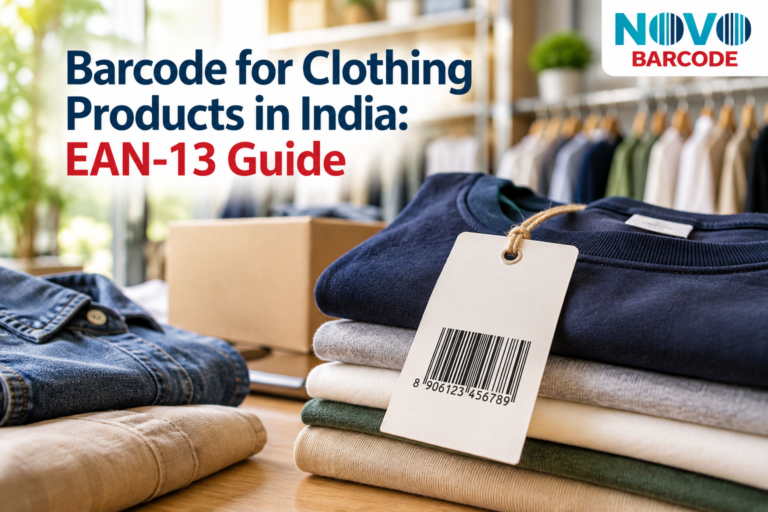 Barcode for Clothing Products in India: EAN-13 Guide
Read guide →
Barcode for Clothing Products in India: EAN-13 Guide
Read guide →
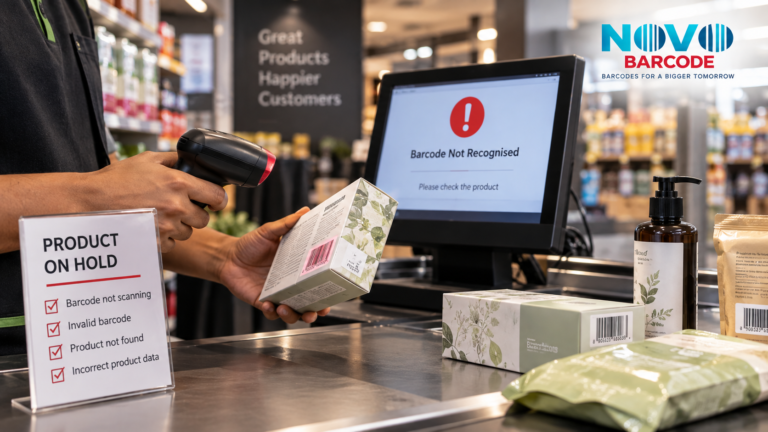 Why Retailers Reject Products With Barcode Problems | India Guide
Read guide →
Why Retailers Reject Products With Barcode Problems | India Guide
Read guide →
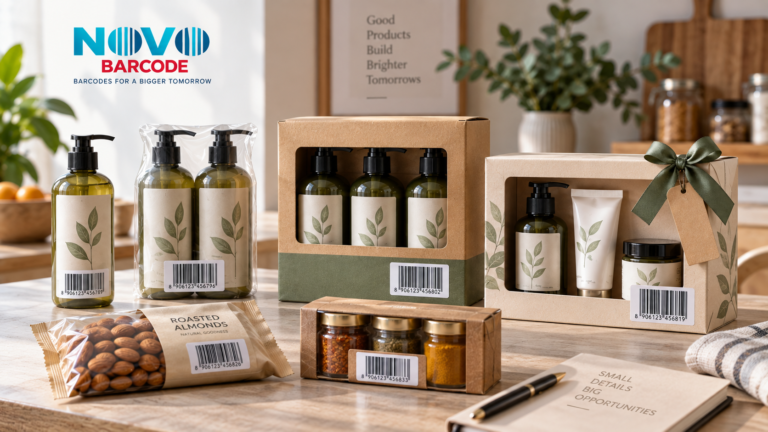 Barcode for Multipack Products in India: Do You Need a New One?
Read guide →
Barcode for Multipack Products in India: Do You Need a New One?
Read guide →
 Why Is My Barcode Not Scanning? 11 Common EAN-13 Problems & Solutions
Read guide →
Why Is My Barcode Not Scanning? 11 Common EAN-13 Problems & Solutions
Read guide →